
11 Tips For Successful And Respectful Communication At Work
- Updated on: July 9, 2024

Appropriate and respectful communication forms the basis for effective, fulfilling and motivating cooperation in any environment. Such communication when practiced responsibly will eventually lead to greater mutual understanding and successful collaboration. It is an important social skill that allows you to act effectively even in diverse and cross-cultural groups. Respectful, successful and professional communication involves more than just the ability to speak. It is an empathetic, non-violent and respectful social action that requires cooperation, participation and fairness in decision-making processes, as well as an active supportive culture where you have to analyse, practice and continuously improve all the aspects that influence interpersonal communication.
Why does it matter?
Successful and respectful communication culture should be developed in every company and institution – both in large corporations or small companies, online or in person, especially in customer-facing service areas. Such communication can help in achieving mutual respect at different levels, for example, between the project manager and the executor; between the teacher and the learner; between employer and employee etc. Badly handled communication, ignorance, an arrogantly categorical way of speaking, unwillingness to listen to what other people have to say and a desire to dominate can gradually destroy self-confidence as well as the desire to share ideas, open up to others or spend time with them. Due to the lack of respectful communication, alienation gradually occurs, the sense of belonging is lost, that is when conflict situations can arise fostering indifference and dislike for some people, and the desire to cooperate disappears.
Do you find it hard to communicate your availability to others?
Discover the best tips for successful and respectful communication at work:
1. Listen actively and without judgement
Emotional intelligence requires the ability to actively listen. If someone turns to you for a piece of advice or for a request to help solve a problem, first of all, listen very openly to the other person’s question or a need. With this, the culture of mutual communication begins, the opportunity to solve more than one painful problem and find non-standard solutions through cooperation. By actively listening, you send a message to the other person that what worries the other person is also important to you. Thus, your judgment and viewpoint has extra weight because you care about what the other person has to say and that represents a true professional in any setting – whether at work or in a non-formal environment.
2. Show empathy
If you do not want or are not ready to truly listen to the other person, it is better not to start communicating, but if you have reached the point of communication, then not only start with active listening, but also show respect and empathy for the other person’s problem or issue. Showing empathy means seeing the problem from the other person’s point of view taking into account one`s feelings and experience. Empathy lets you better understand the other person when you put yourself in the situation in which the other person is and try to think how you would act in their place. This is emotional empathy. Empathizing with the other person’s problem makes it easier to find a solution and it also provides emotional security, support and shows respect for the other person.
3. Focus on the positive
You can always find something positive in everything. Even if at first glance it seems that you have nothing in common with the other person in a given moment, look at the other person’s situation through some basic states or values, existential base positions. Yes, maybe you cannot agree with the other person’s position or insights on the issue, but, for example, universal human qualities, basic rights, everyday challenges are common to almost everyone. It also means to focus on the common aspects and interests, to look positively at the similarities, not the differences. And later, when the basis of understanding has been established, you can express your disagreement or opinion, where your thoughts differ, in a diplomatic, justified and respectful manner.

4. Be honest to others
In mutual communication, there is usually no worse situation than to feel lied to and find out later that the other person has hidden something from you or has not told all the information and circumstances. Hiding important facts and matters does not help the situation, but often makes it worse. Honesty does not mean telling everything about yourself to everyone all the time. Openness and honesty means telling the other person what you think, how you see things and putting your principles and values in the eyes of other people, sticking to them, but at the same time respecting and listening with acceptance to the other person and the presentation of his value system. It represents mutual coexistence of different value systems and acceptance of each other instead of disagreements of values and principles, which can never lead to anything good.
5. Be sincere and realistic
Allow the other person to be themselves, real and honest, open in conversation, do not set any imaginary standards built in your head, what the other person should be or how they should behave in your mutual communication. By showing sincerity, simplicity and realistic discussion of the problem, you will motivate the other person to get closer to their goal and you will feel the satisfaction of success yourself. Also – the other person will show you respect not because of your position, status or advice, but because of your sincerity, openness and realistic view of life. And this tip also includes the ability to apologize openly and honestly if you’ve made a mistake. Being able to admit your mistakes is a sign of great and emotionally intelligent people, thus you show that relationships are more important and valuable than your imagined ego standard.
6. Make sure to be direct
People are by no means fortune tellers and magicians who can read your mind. Thus, both parties in communication must be direct and open about their insights into the problem and its possible solutions. Openness leads to a solution much more successfully than talking indirectly and in circles. Of course, there are situations when there are negative solutions or decisions to be made, but even then, openness combined with tact and generosity, and respect can make such situations communicated and managed more smoothly and understandingly.
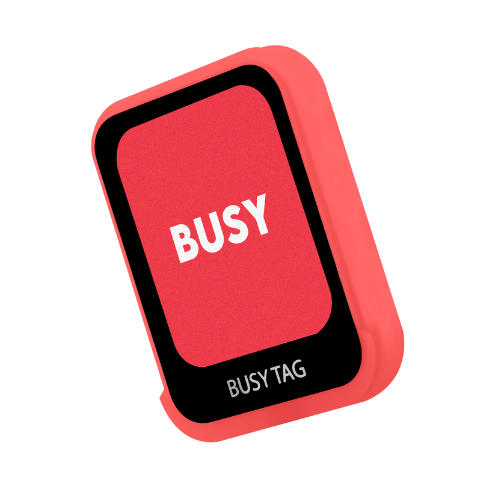
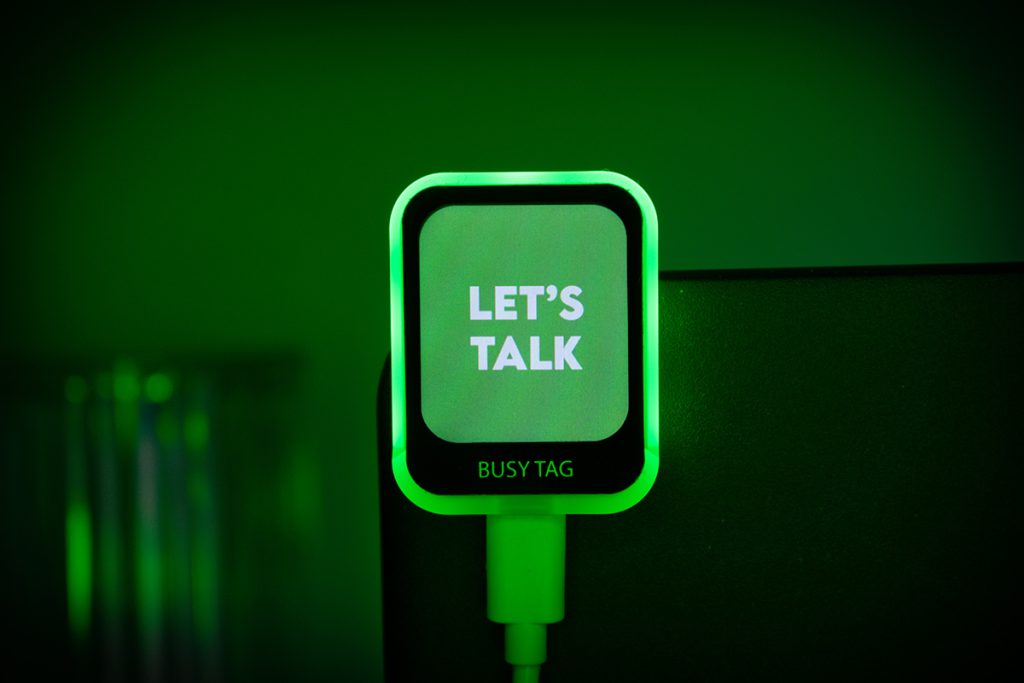
Communicate while you are busy without saying a word.
7. Respect the other person
When communicating with others, always follow the golden standard: communicate and talk to others the way you would like them to communicate and talk to you. It really doesn’t take that much of an effort. The rules are simple – be polite, say hello, don’t use sarcasm or irony in the conversation, smile at the other person, and show positive and warm emotions, openness and you will notice how the world and those around you flourish and become friendlier and more open. Kindness and respect go a long way – even a small thank you note or a funny message to a colleague on your Busy Tag will brighten their day.
8. Know when to take a pause
Taking a break in mutual communication helps to focus thoughts, reflect and to decide what is to be said and done next, and it should be taken into account especially if you are in a middle of an argument or a tense situation. As the saying goes, count to 10, take a breath, think and then say what you have to say. Of course, in theory it is easy to say, but in practice it is always difficult to implement, however, we all need to work on this aspect of our personality. We all have our own skills to improve, we learn from our own and others’ mistakes and thus we also grow in our empathy and emotional intelligence. Remember, when communicating, always pause before saying what you have to say. This helps to keep the focus on the other person’s problems and your suggested solutions.
9. Learn to compromise
Emotional and general intelligence requires you to be careful and refrain from fighting, escalating a conversation or aggressively attacking any statement and opinion that you disagree with. People are emotional beings and we all want to hold on to our opinion until the end. But fighting for our opinion closes the mind and narrows thinking, so the other person no longer hears your judgments and conclusions about the situation. This does not necessarily mean agreeing with opinions and statements that you disagree with. In heated situations especially at work is good to remember the old saying – choose battles worth fighting for! This decision can make or break your reputation and potential business deals.

10. Be consistent and open to talk
Mutual communication should always be more or less effective, which means – both parties should be heard, and understood and come to some conclusion and solution. Always give the other person the necessary time, no matter what form of communication the other person chooses – over the phone, in person or in writing, using electronic or traditional communication channels. Remember that time is always an ally, especially in mutual communication and finding solutions to the other party’s problems. We are all busy with our own tasks and problems, so always be open and flexible to the possibility of setting some time for an important conversation. And when you have determined the time and moment of the conversation, do not let it be postponed or canceled. This helps you stay focused and oriented towards achieving a solution in a transparent time frame, which is always an indicator of productivity. And, finally, a reminder: the more important the relationship, the more time you should spend on face-to-face conversation.
11. Body language matters
Body language is a powerful tool in communication, often conveying more than words themselves. It’s the silent conversation happening alongside your spoken message, influencing how your words are perceived. Pay attention to facial expressions of others and make sure you are approachable as smile conveys warmth, while a frown suggests disapproval. Good eye contact shows attentiveness and confidence, while avoiding eye contact can signal nervousness or dishonesty. An upright posture indicates confidence and openness, while slouching suggests boredom or disinterest. Make eye contact, use open body language, and project confidence with your posture. By mastering body language, you can become a more confident and impactful communicator in all your work interactions.
Get your Tips for successful and respectful communication at work PDF now!
To sum up
We are all very different – with our experience, perception of life and personal opinion. And when we go through life and daily work with our outlook on things, people and situation, we meet the same “different, unique people” with whom we must learn to find a common language, develop flexibly adapting to the opinions, ideas and attitudes of others. Sometimes it’s not that easy, but by learning some basics of respectful communication approaches and tips, dealing with other people becomes much more pleasant and effective.
Your work environment can make or break your day. A respectful and productive atmosphere and communication fosters collaboration, boosts morale, and fuels success. This article explores 11 key elements to cultivate such an environment so that you can foster a more respectful and productive work environment for yourself and your colleagues. By implementing these practices, you and your colleagues can create a workplace where everyone feels valued, empowered, and focused on achieving great things.
Luxafor Orb
LUXAFOR HELPS PEOPLE TO ACHIEVE THEIR GREATEST PRODUCTIVITY LEVELS WITH A WIDE VARIETY OF OFFICE PRODUCTS. LET’S BE PRODUCTIVE TOGETHER!
Get your Tips for successful and respectful communication at work PDF now!
Get your Tips for successful and respectful communication at work PDF now!
11 Tips For Successful And Respectful Communication At Work






Tags
Archives
- March 2026
- January 2026
- December 2025
- November 2025
- October 2025
- September 2025
- August 2025
- July 2025
- June 2025
- May 2025
- February 2025
- January 2025
- December 2024
- November 2024
- October 2024
- September 2024
- August 2024
- July 2024
- June 2024
- May 2024
- April 2024
- March 2024
- February 2024
- January 2024
- December 2023
- November 2023
- October 2023
- September 2023
- August 2023
- July 2023
- June 2023
- May 2023
- April 2023
- March 2023
- February 2023
- January 2023
- December 2022
- November 2022
- October 2022
- September 2022
- August 2022
- July 2022
- June 2022
- May 2022
- April 2022
- March 2022
- February 2022
- January 2022
- December 2021
- November 2021
- October 2021
- September 2021
- August 2021
- July 2021
- June 2021
- May 2021
- April 2021
- March 2021
- February 2021
- January 2021
- December 2020
- November 2020
- October 2020
- September 2020
- August 2020
- July 2020
- June 2020
- May 2020
- April 2020
- March 2020
- December 2019
- November 2019
- October 2019
- September 2019
- August 2019
- July 2019
- April 2019
- March 2019
- January 2019
- December 2018
- November 2018
- October 2018
- September 2018
- August 2018
- July 2018
- June 2018
- August 2017
- May 2017
- April 2017
- February 2017
- January 2017
- November 2016
- October 2016
- September 2016
- August 2016
- July 2016
- June 2016
- May 2016
- April 2016
- March 2016
- February 2016
- January 2016